When Jesus Set His Face Toward Jerusalem
Today we come to a quiet verse that marks one of the most significant turning points in the Gospel narrative.
Luke wrote, "Now it came to pass, when the time had come for Him to be received up, that He steadfastly set His face to go to Jerusalem" (Luke 9:51 NKJV).
At first glance, it may seem like a simple transition in the story. Jesus had ministered in the northern regions of Israel, and He traveled south toward Jerusalem. But the language Luke uses tells us that something far deeper happened. A divine appointment was approaching.
Luke said, "When the time had come."
The life of Jesus was never governed by accident or circumstance. Throughout the Gospels we repeatedly read about how Jesus spoke about His hour, a moment appointed by the Father when the purpose of His mission would reach its fulfillment. Until that hour arrived, no one could take His life. But when the time came, Jesus did not resist the moment. He embraced it. This is the deeper revelation hidden in Luke's words: the cross was not a tragedy that overtook Jesus. It was an assignment He willingly stepped into. The Messiah was moving toward the altar.
Luke also told us that Jesus "set His face" toward Jerusalem. This phrase carries the idea of firm resolve. It describes a decision that had already been settled in the heart. Jesus was not simply traveling toward a city. He was moving toward the place where the Lamb of God would be offered for the redemption of the world.
Jerusalem was the center of Israel's worship. It was the place where sacrifices were offered, where priests ministered, and where generations had come to seek the presence of God. Yet in the days ahead, Jerusalem would witness something it had never seen before: the final sacrifice. The Lamb was walking toward the altar. And He was doing it willingly.
Redemption Was Not Forced: It Was Chosen
This moment revealed something profound about the nature of Christ's mission. Jesus was not driven toward the cross by human hostility alone. Religious leaders opposed Him. Political powers condemned Him. Betrayal came from one of His own disciples. Yet none of those things were ultimately in control of the story. Jesus Himself moved toward the cross. Step by step, He aligned Himself with the plan of redemption that had been unfolding since the foundation of the world. The Lamb was not captured. The Lamb advanced.
 This changes how we see the road to Easter. The cross was not the moment when evil won. It was the moment when God's redemptive plan reached its appointed hour...
As He moved closer to Jerusalem, tensions rose, hearts divided, and forces both seen and unseen positioned themselves for what would happen. (Photo via Piqsels)
The road to resurrection began.
When the Lamb Was Presented
As Jesus approached Jerusalem, the celebration swelled around Him. Crowds gathered along the road, many of them were pilgrims who had traveled from across Israel for the Passover feast. Word about Jesus had spread throughout the region, and as He drew closer to the city the excitement was impossible to contain. People laid their cloaks across the road before Him. Palm branches were spread along the path. Voices rose together in praise: "Blessed is the King who comes in the name of the Lord!" (Luke 19:38).
To those in the crowd, it felt like the long-awaited arrival of a king. For generations Israel had hoped for the Messiah, the one who would restore the nation and bring the Kingdom of God into the world. But Heaven understood something the crowd did not yet see. This moment was more than the arrival of a king. It was the presentation of the Lamb...
Centuries earlier, God had given Israel specific instructions for the Passover. On the tenth day of the month, each household was to select a lamb and bring it into the home. For several days, the lamb would be examined to make sure it was without blemish. Then the lamb would be sacrificed. What most people in Jerusalem did not realize was that Jesus entered the city on the very day the Passover lambs were being chosen. While families across Jerusalem selected their lambs for sacrifice, God presented His Lamb to the city. The crowd shouted words from the Psalms, celebrating what they believed was the arrival of a king. But Heaven knew the deeper truth. The Lamb of God had just been presented to Israel.
Over the next several days, Jesus was questioned, challenged, and examined by religious leaders, teachers of the law, and eventually Roman authorities. Again and again, they searched for a flaw, some reason to condemn Him. Yet the verdict was always the same. They found no fault in Him, just like the Passover lamb. What looked like celebration on the road to Jerusalem was actually the beginning of the final preparation for sacrifice. The Lamb had entered the city. And the road to redemption moved forward exactly as Heaven had planned.
The Son of God Sold like a Slave
 As the final days before Passover unfolded, a quiet but decisive moment took shape behind the scenes. While Jesus taught openly in the temple, confronting corruption and revealing the Kingdom, another movement formed in the shadows. Judas, one of the twelve, went to the chief priests and agreed to betray Him. Luke tells us they were glad and agreed to give him money. Matthew reveals the amount: thirty pieces of silver. (Photo via Pexels)
At first glance, it seemed like a simple transaction. But within the larger story of Scripture, this moment carried profound prophetic weight. Thirty pieces of silver was not a random number. According to the law in Exodus, it was the established price of a slave. The Son of God was valued at the price of a servant. This was not outside the plan of God. Isaiah had already revealed that the Messiah would come as the suffering servant, not in power as men expected but in humility, bearing the weight of redemption. What looked like rejection was actually alignment. What appeared to be betrayal moved the story toward its appointed fulfillment.
The deeper tension of this moment was not only found in the price, but in the proximity. Judas walked with Jesus, heard His words, and witnessed His power. This reminds us that the greatest battles are not always fought at a distance, but often within the places of closest access and familiarity. And yet, even here, the sovereignty of God is unmistakable. The Lamb was not taken against His will. Step by step, the plan of redemption advanced exactly as Heaven had ordained.
The Son was sold like a slave so that sons and daughters could be set free. He was handed over by man, but He was given by God. What looked like betrayal was actually the doorway to redemption.
When His Body Was Broken
When Jesus was handed over to the Roman authorities, the course of events was set in motion. The verdict was spoken, even if reluctantly, and the path to the cross unfolded with sobering clarity. What followed was not incidental to the story of redemption, but central to it.
Before Jesus was led to Golgotha, He was scourged. To modern readers, it can be difficult to fully grasp what this meant. Roman scourging was not a simple beating, but a brutal and methodical act intended to break the body. The instrument used in this punishment was designed to tear into the flesh, leaving wounds that went far beyond the surface. It was a form of suffering that affected the entire physical being, leaving the body weakened, exposed, and visibly broken.
At first glance, this moment could seem like an unnecessary cruelty, an excessive act within an already unjust process. Yet when viewed within the larger story of Scripture, it becomes clear that even here, nothing was without purpose. The suffering of Jesus was not described in general terms, but with a level of detail that invites us to slow down and consider what took place.
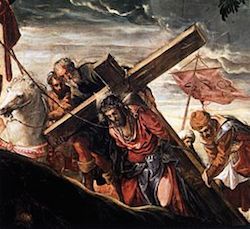 His body was not simply struck; it was broken. His wounds were not incidental; they were meaningful. What happened in that moment was not separate from the cross, but part of the unfolding work of redemption.
From the beginning, the effects of the fall were not confined to the spiritual realm. Humanity experienced separation from God but also the introduction of pain, weakness, and physical decay. The human body, created for life and strength, became subject to suffering. Scripture presents this as part of the brokenness that entered the world, and in the suffering of Christ, that brokenness was met directly. (Photo via Wikimedia Commons)
In the scourging of Jesus, we see that reality brought into focus. His body bore the weight of what humanity had carried physically. The blows He received were not symbolic gestures, but real and tangible. They remind us that the work of redemption was not abstract or distant. It took place within the reality of human experience.
There is also a clear connection to what had already unfolded. In the garden, Jesus faced the weight of what lay ahead and surrendered fully to the will of the Father. That surrender carried forward into what was done to Him. What was embraced internally was expressed outwardly. The path He chose in Gethsemane was walked out step by step.
This moment, as difficult as it is to consider, prepares us to see more clearly what was accomplished through His suffering. It invites us to look beyond the surface of the event and recognize that there was meaning in what He endured, even if that meaning was not yet fully revealed.
The significance of these wounds would come into sharper focus. What happened was not random, and it was not without intention. It was part of a larger work that unfolded.
The Blood of the Cross
By the time Jesus was led to Golgotha, the events of the previous hours revealed the depth of what He was willing to carry. The garden showed His surrender. The trial confirmed His innocence. The scourging exposed the physical cost. The cross stood before Him, not as a symbol, but as a reality He would enter fully.
Crucifixion was designed to be both public and prolonged. It was meant to display suffering in a way that could not be ignored. Jesus was nailed to the cross and lifted up before those who passed by, becoming the visible center of a moment that would forever shape history. Yet what happened in that place went far beyond what could be seen. This was where the final shedding of blood took place.
 If the garden revealed the redemption of the soul, and the stripes revealed the reality of suffering in the body, the cross brings us to the deepest layer of all. Here, the work of redemption reached into the very heart of humanity's separation from God. (Photo via Flickr)
Scripture tells us that "without the shedding of blood there is no remission" (Hebrews 9:22). This principle runs throughout the Biblical narrative, from the earliest sacrifices to the system established under the law. Blood was required, not as ritual alone, but as a recognition of the cost of sin. Something had to be given in order for restoration to occur. At the cross, that requirement was fulfilled in its fullest sense. Jesus did not offer the blood of another. He offered His own.
What made this moment so significant was not only the physical suffering He endured, but what He carried within it. The cross was not simply the place where Jesus died. It was the place where He bore sin. The weight of humanity's rebellion, failure, and separation was placed upon Him. The One who knew no sin stepped into the position of sin itself. This is the exchange that defined redemption. He took what belonged to us so that we could receive what belongs to Him.
The language of the Gospels reflects the depth of that moment. As the hours passed, darkness covered the land. The scene shifted from public spectacle to something far more profound. Jesus cried out, not only from physical pain, but from the reality of what He carried. In that cry, we hear the weight of separation, the cost of standing in the place of humanity before a holy God. And yet, even in that moment, there was purpose. Nothing about that moment was accidental. Jesus remained fully aware of what He was doing. His words from the cross reflected not defeat, but completion. When He finally said, "It is finished," He was not speaking of the end of His life alone. He was declaring that the work He had come to accomplish had been brought to its intended fulfillment.
The debt of sin had been addressed. The barrier between God and humanity had been dealt with. The way had been opened. This was the final shedding. The blood of the cross. It was there that redemption reached its deepest point, addressing not only the inner life of humanity or the physical effects of the fall, but the separation that stood between humanity and God. What could not be resolved through effort, law, or sacrifice was fulfilled through the offering of Christ Himself.
The cross stands as both the most sobering and the most hopeful moment in the story. It reveals the seriousness of sin, but also the depth of God's love. It shows us what was required, and at the same time, what was freely given. And yet, even this was not the end. What appeared to be final was only part of a greater unfolding.
When Hell Was Confronted
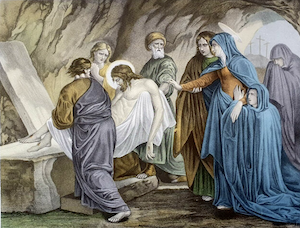 After the final words were spoken and the body of Jesus was taken down from the cross, the visible story seemed to come to a halt. The crowds dispersed, the sky cleared, and what had been so public was suddenly quiet. From every outward perspective, it appeared that the moment had passed. Jesus was placed in the tomb. Yet the work of redemption was not confined to what could be seen. (Photo via Picryl)
Scripture gives us glimpses into a dimension of this story that unfolded beyond the visible scene. While the body of Jesus lay in the tomb, the full reality of what had been accomplished at the cross was carried into the unseen realm. The victory that had been secured was declared.
Paul later wrote that Christ, "having disarmed principalities and powers... made a public spectacle of them, triumphing over them in it" (Colossians 2:15 NKJV). This is not language of silence or inactivity. It is the language of confrontation and victory. What appeared to be a moment of stillness was, in reality, a moment of declaration.
The cross was not only the place where sin was addressed. It was the place where authority shifted. The powers that had held influence through sin and death were confronted by the One who had fully satisfied the requirement of justice. What they had once used to accuse no longer held its power. This was where the depth of redemption began to expand. Jesus not only died, He entered into the full reality of death, and in doing so, He carried the finished work of the cross into the very realm that had once held humanity in bondage.
Peter gave us a glimpse of this when he wrote that Christ "went and preached to the spirits in prison" (1 Peter 3:19 NKJV). While much about that moment remains beyond full explanation, what is clear is that the work of Jesus did not stop at the cross or at the tomb. It extended into the unseen. This was not a struggle for victory; it was the announcement of it.
The One who took on sin and satisfied its demand stood in complete authority. What had once held humanity captive no longer had a claim. The power of sin was broken. The authority of death was confronted. This is why the silence of that moment is so often misunderstood. It was not the silence of defeat. It was the silence that follows a decisive victory. From the perspective of those on earth, nothing seemed to be happening. But in the realm that could not be seen, the implications of the cross were being fully established. What had been accomplished was being declared.
This moment reminds us that God's work is not always visible in the moment it is taking place. There are times when what appears still is actually filled with movement, when what seems quiet is carrying the weight of something significant. The tomb was not the end. And the silence was not empty. It was filled with the unfolding of victory.
When Hell Was Plundered
"Therefore He says: 'When He ascended on high, He led captivity captive, and gave gifts to men.'" (Ephesians 4:8)
In the hours that followed the cross, the visible story appeared to slow into silence. The body of Jesus was placed in the tomb, the stone was sealed, and from every outward perspective, the movement had come to an end. Yet what could not be seen continued to unfold with precision. The work of redemption did not stop at the cross. It moved into the unseen.
 Scripture gives us glimpses into this dimension, not with exhaustive detail, but with enough clarity to understand that something decisive took place beyond the reach of human observation. Paul wrote that when Christ ascended, "He led captivity captive and gave gifts to men." The language points back to something that occurred before the ascension, something that required Him to descend first. This descent was not passive. It was purposeful. (Photo via Creative Commons)
Jesus did not enter the realm of death as one subject to its authority. He entered as the one who had already satisfied the full demand of sin. The cross had accomplished what was necessary. The debt had been paid. The legal ground that once empowered accusation was removed. What remained was not a battle for victory, but the enforcement of it. This was where the depth of the moment began to emerge.
Throughout Scripture, death was not only a physical reality but a realm that carried influence, shaped by the consequences of sin. It represented separation, limitation, and the holding place of what had not yet been redeemed. Humanity did not enter that realm with authority. It entered subject to it. But Jesus entered differently. He entered having fulfilled the requirement that gave death its claim. He entered with authority.
Paul's language in Colossians tells us that He "disarmed principalities and powers," making "a public spectacle of them, triumphing over them" (Colossians 2:15 NKJV). This is not imagery of struggle. It is imagery of triumph. The powers that once held influence through accusation and bondage were stripped of their authority, not by force alone, but because the foundation of their claim had been removed. This is what it means to say that Hell was plundered. What once held humanity was no longer able to retain it. What once claimed authority was now exposed as defeated.
The phrase "He led captivity captive" carries a striking picture. That which once held others in bondage was itself taken captive. The direction was reversed. The order was overturned. What was once a place of holding became a place of release. This moment reaches back through the entire story of redemption.
What had been anticipated through generations was finally fulfilled. The barrier of sin was addressed at the cross. The realm that once held its consequences was confronted with the reality of that finished work.
Jesus did not negotiate. He declared. He did not contend for authority. He exercised it. And in doing so, He established something that would carry forward into everything that followed.
The resurrection was not the beginning of victory. It was the unveiling of it.
What took place in the unseen moment ensured that when the stone was moved and the tomb was found empty, it was not a question of possibility but a revelation of what had already been secured. This is why the silence of the tomb was not empty. It was filled with the sound of victory being established beyond what human eyes could see. And as that work reached its completion, the moment approached when what had been secured in the unseen would break forth into the visible.
When the Stone Was Rolled Away
"And behold, there was a great earthquake; for an angel of the Lord descended from Heaven, and came and rolled back the stone from the door, and sat on it." (Matthew 28:2 NKJV)
After the weight of silence and the confusion that lingered among the disciples, there came a moment when Heaven moved in a way that could no longer be ignored. What had been hidden was about to be revealed, and what had seemed final was about to be overturned. Matthew records that there was a great earthquake, a disruption that signaled more than a physical event. It marked the intrusion of Heaven into what had been carefully sealed by human hands.
 An angel of the Lord descended, approached the tomb, and rolled back the stone. The action itself was simple, yet its meaning was layered with significance. The stone had been placed with intention. It represented closure, security, and the belief that what had been done could not be undone. It stood as a visible declaration that the story had reached its conclusion. Yet in a single moment, that declaration was overturned, not through human effort, but by divine authority. (Photo via Unsplash)
The detail that the angel sat upon the stone is particularly revealing. This was not merely the removal of an obstacle but the demonstration of dominion. What had symbolized finality was now placed under the authority of Heaven. The stone, which had once been the object of concern, was reduced to something that could be rested upon, its power and purpose completely diminished.
There was, however, a deeper layer to this moment that reshapes how we understand what took place. The stone was not moved so that Jesus could emerge from the tomb, as though He were confined by it. By the time the stone was rolled away, the work of resurrection had already been accomplished. The life that had been laid down had already been raised. The stone did not release Him. It revealed what had already occurred.
This distinction matters, because it shifts our understanding from cause to revelation. The movement of the stone did not create the miracle. It unveiled it. What God had accomplished in the unseen was made visible, not for His benefit, but for the sake of those who would come and see.
This pattern extends beyond the moment itself. There are times when we wait for visible change before we believe that something has shifted. We look for the external sign, the movement of the stone, before we are willing to accept that God has already acted. Yet this moment reminds us that God often completes His work before we see the evidence of it. The visible shift is not the beginning of the miracle, but the confirmation of it.
The guards, who had been entrusted with maintaining the seal, found themselves unable to stand in the presence of what had occurred. The authority that had secured the tomb was no match for the authority that opened it. What had been placed under human control was fully subject to divine intervention, and there was no resistance that could hold its ground.
In that moment, the tomb stood open, the stone displaced, and the evidence of what had been hidden was available to be seen. What had appeared final was revealed to be temporary, and what had been concealed was brought into the light. The silence that once filled the scene began to give way, and the confusion that had settled in the hearts of the disciples was about to be confronted with clarity.
This was the turning point where everything began to change. The story was no longer held behind a stone, and the reality of what had been accomplished was no longer confined to the unseen. What had been secured was now ready to be declared, and what had been revealed was about to be proclaimed with unmistakable certainty.
He Is Risen!
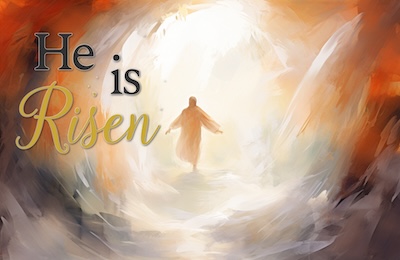 "He is not here, but is risen! Remember how He spoke to you when He was still in Galilee." (Luke 24:6 NKJV)
By the time the women arrived at the tomb, the question was no longer what had happened to Jesus, but whether they would recognize what had taken place. They came prepared for what they understood, carrying spices, expecting to tend to a body. What they encountered instead was something that redefined everything. The stone had been moved. The tomb was open. And the One they came to find was not there. (Photo via Public Domain Pictures)
The message given to them was both simple and profound. "He is not here, but is risen." These words did not introduce a possibility or suggest an outcome. They declared a reality that had already been established. What had been promised was fulfilled. What had been hidden was revealed.
The resurrection was not merely an event within the story. It was the moment that gave meaning to everything that came before it. The cross was not the end. The silence was not empty. The stone was not final. All of it was leading here.
What Jesus accomplished was not partial, and it was not temporary. The life that was laid down was taken up again, not by external force but by the authority that had always belonged to Him. Death, which once carried weight and finality, had been entered, confronted, and overcome.
This is why the resurrection carries such significance. It was not simply that Jesus lived again. It was that death no longer held the same authority. What once defined the boundary of human existence had broken open. The limitation that seemed absolute had been exposed as temporary. The resurrection did not ignore death. It passed through it and rendered it powerless. Everything began to shift in light of this reality.
The words of Jesus, which once seemed difficult to understand, took on clarity. The promises that felt distant were anchored in something that had been demonstrated. What the disciples could not reconcile in the silence made sense in the light of what had been revealed.
The resurrection is both personal and cosmic in its reach. It speaks to the individual, declaring that what is broken can be restored, that what feels final is not beyond redemption, and that life can emerge where death once seemed to have the final word. At the same time, it speaks to the larger story, establishing that the authority of Christ extends beyond the visible and into every realm that once held influence.
This is not a quiet conclusion. It is a decisive declaration. He is risen! And because He is risen, everything that stands against the purposes of God has been confronted and overcome. The victory that was secured in the unseen has been revealed in the visible, and the implications of that victory continue to unfold. The story does not end here. It begins here.
What has been revealed now moves outward, carried by those who have encountered it, proclaimed through lives that have been changed by it, and lived out in the reality that death no longer defines the outcome.
He is risen. And nothing remains the same!
Whatever you do, don't miss another ELIJAH LIST email! Subscribe at this link: elijahlist.com/subscribe.
Dr. Scott Reece
Lead Pastor of River City Church
Email: drscottreece@yahoo.com
Website: www.drscottreece.com
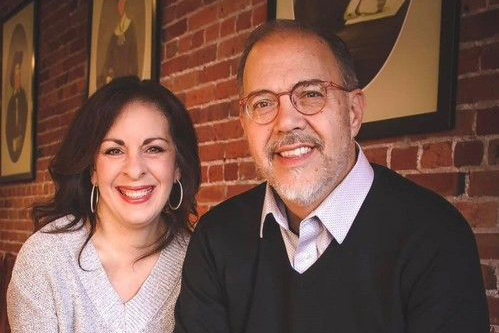
Dr. Scott Reece is a husband, father, lead pastor, church planter, and apostolic leader of the Azusa Network of Churches and Ministries. His passions include pastoral leadership, global missions, studying, preaching, and teaching the Word of God. Being called as a pastor to pastors, serving leaders, congregations, and ministries, he is committed to Biblical and leadership authenticity. With an apostolic mantle on his life, he is passionate about equipping and releasing the next generation of leaders in the fullness of the Kingdom. He and his wife, Michelle, make their home in Bettendorf, Iowa, and are lead pastors of River City Church, located in the Quad Cities. They are the proud parents of six children and three grandchildren.
To receive more words like this in YOUR inbox, subscribe FREE to the Elijah List at this link: elijahlist.com/subscribe.

Thank you for making the always-free "ElijahStreams" possible. To partner with us, click here.
Your donations truly help us keep these emails free for you. Donate at:
Find us on:
* Facebook click here
* XAPiT click here