The Well of Beersheba and the Meaning the Name
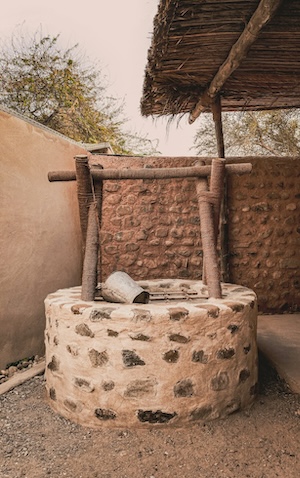
Recently, God spoke to me but a specific well called "Beersheba." In Biblical times, wells were named to commemorate significant occurrences that happened at the site. The Hebrew word "beer" (Strong's H875) means "well," "spring," or "pit." But the word "shebah" (Strong's H7650) comes from the Hebrew "shaba," which encompasses a variety of meanings, such as "feed to the full," "take an oath," "swear (as if by repeating a declaration seven times)," and "promised them by oath."
The history of this well goes back to Genesis 21:25. This particular well of Abraham's had been seized by Abimelek's servants. Abimelek said he did not know of it, so Abraham offered him seven ewe lambs to buy it back. The oath was made, and everyone left peacefully.
Wells of Promise
Let's unpack the meaning for us in this first portion of the story. We all have wells, springs, and deep, hidden places that give life. Sometimes God supplies us with wells of natural resources, but more often we have generational blessings—prophetic promises over our cities, our nations, our churches, or our own lives. These promises come in the form of the living water of His Word. When He speaks something over us or makes us a promise in His Word, it waters and causes fruit to grow in keeping with that Word.
The Dispute Over Wells of Promise
When we hear of Beersheba in Genesis 21, the well was being disputed. There was an illegitimate draw on the resources in that well. The same thing happens when we give our giftings, resources, or time to things other than what God has called us to. This wasn't a hostile attack from an enemy but a subtle negligence that caused what was supposed to supply him to get diverted.
Abraham's response was critical. He didn't get offended. This would have started battles where there hadn't been any. He didn't take on a victim mentality. This would have caused him to settle into bitterness and give up hope of reclaiming what would easily be redeemed. He also didn't ignore it and allow the well to be taken over, though it may have been easier and surely would have been cheaper. There was a cost to reclaim what was his, and he was willing to pay it.
Reclaiming Wells
In our own well reclaiming, we need to encounter God and ask Him these questions:
 • "What gifts/time/resources/prophetic promises are You wanting me to reclaim?"
• "Where do I need to let go of bitterness or a victim mentality?"
• "What dream or promise do You have for me that I've been ignoring?"
As the account in Genesis continued, years after the death of Abraham, Isaac found himself the target of the Philistines' jealousy, and they filled with earth all the old wells of Abraham (Genesis 26:15). Isaac went on a quest to reopen the wells of his father. When he and his servants moved on to Beersheba, God encountered Isaac in a dream. (Photo via Unsplash)
"And that night the Lord appeared to him and said, 'I am the God of your father Abraham. Do not be afraid, for I am with you. I will bless you and multiply your descendants for the sake of My servant Abraham.'" (Genesis 26:24 BSB)
Isaac redug the well there, and, as if he triggered something cyclical in the spirit, back came Abimelek. Abimelek, along with his adviser and commander, said to Isaac, "We saw clearly that the Lord was with you; so we said, 'There ought to be a sworn agreement between us'—between us and you. Let us make a treaty with you'" (Genesis 26:28 NIV). They feasted, made an oath, and went away in peace. "That day Isaac's servants came and told him about the well they had dug. They said, 'We've found water!' He called it Shibah, and to this day the name of the town has been Beersheba" (Genesis 26:32–33 NIV).
We are in a time when God is putting it on our hearts to reopen the wells of our heavenly Father. When Isaac reopened the well at Beersheba, the Lord spoke again of the promise that He had placed over him since the time of Abraham.
What promise is God speaking again over you, your organization, your city, or your nation?
What opportunities is He bringing back around?
Renaming Wells: There Is Power in the Name
Isaac renamed the reopened well the same name as the old well: "Shibah." By speaking this word over it, he brought about a revival of the same conditions that prompted the name in the first place. This was not because he manifested it in some kind of "name it, claim it" process, but because by restoring it to its original name, it was a nod to the testimony of what God had done there.
When we declare again what God has done or what He has promised to do, we are declaring His words, not ours, and His words have power. We see with the well at Beersheba that the second naming once again fulfilled its name's meaning, because it became the place of agreement, oath, redeclaration, and being fully fed. The beautiful extension is that this became more than a well. In the restoration of this well, an entire city with its same name sprung up around it.
What does God call the "wells" He is reopening through you?
Just as wells give the water of life to many in that community, how is what God is speaking and doing in your life, church, city, and nation bringing life to the world?
What has He named those wells that He is restoring for you?
The Similarities Between Recovering Old Wells in the Natural and in the Spirit
In receiving this word, I researched what happens in the natural with the recovery of old wells.
1. Finding the Old Wells
 First, to find old wells, a person must look at old maps and blueprints. In the natural, this helps you know how the land was previously used and can uncover useful amenities. In the spirit, this looks like researching or remembering the history of testimonies. This also looks like asking the Lord what His blueprint looks like for that area. (Photo via Pexels)
Also, looking at inconsistencies, like dips in the land or pipes that have no apparent purpose, can also help to identify old wells. For us, this looks like asking the Lord to open our eyes to things whose purpose is not yet understood—"left over" things in our lives or giftings that haven't yet been utilized—or even looking at "low places" and asking, "God, what is Your vision for this?"
2. Reviving the Old Wells
I also found the steps to reviving old wells in the natural, and I feel they hold some truth for what God is calling us to do in the spirit. Abraham had to pay seven lambs. Isaac had to put in a lot of recovery work. Both of the circumstances had a cost, so to speak. Similarly, we may have to do some work in our own hearts to prepare.
The first step is to clean the well. For us, this could look like pruning, inner healing, or removing attachments—all of which allow us to make a clean start in our own hearts.
Second, test the water. This looks like bringing all the direction and words from the Lord that you've held on to about this area and saying, "Holy Spirit, please test this."
"Do not despise prophecies, but test everything; hold fast what is good." (1 Thessalonians 5:20–21 ESV)
Finally, fix structural issues. Restructuring is a lot of remodeling. It gets messier before it gets better. Be okay with the mess of construction, and let God break down walls and build walls as He needs. When the structure of a building changes, so does its use. So sometimes when God is creating a new use for something, He must also change the structure. The key is to be flexible as He reopens His promises and blessings over you and your community.
Activation
Father, thank You for the wells that You are reopening right now. We ask for eyes to see Your promises and Your blueprints for these places, and we ask for Your power to restore them. Teach us to abide during this process, to be flexible and unoffendable, to let You clean, prune, and simplify our lives. We thank You for the wells that You are opening, not just for us but for our communities. And we pray this all in Jesus' name, amen.
Whatever you do, don't miss another ELIJAH LIST email! Subscribe at this link: elijahlist.com/subscribe.
Sara Whitten
Arrows of Zion
Email: sara@arrowsofzion.com
Website: www.arrowsofzion.com
Sara Whitten is an author, speaker, and founder of Arrows of Zion Ministries which has been offering resources to equip to the body of believers since 2017. This ministry focuses on creating space to regularly encounter God's voice and live lives that are fertile soil for the kingdom of God. Her writings are featured in many publications, including the Elijah List and Charisma. She also hosts "Hear God Every Day," a podcast with tools to help amplify the voice of God amidst the noise of everyday life. She and her husband currently reside in Kerrville, Texas with their three children.
To receive more words like this in YOUR inbox, subscribe FREE to the Elijah List at this link: elijahlist.com/subscribe.

Thank you for making the always-free "ElijahStreams" possible. To partner with us, click here.
Your donations truly help us keep these emails free for you. Donate at:
Find us on Facebook click here