The Flood and the Protection of a Generation
Most Believers read the story of Noah and the flood (Genesis 6–9) and immediately think about judgment. They picture rising waters, a massive ark, and the destruction of a corrupt generation. While those elements are certainly part of the narrative, I would suggest that the deeper revelation is not primarily about judgment. It is about preservation. The flood was not merely about what God was ending. It was about what God was protecting.
While an entire civilization saw only devastation, God was preserving a bloodline, a covenant, and a redemptive plan that would ultimately lead to Christ. The story of Noah reveals how God preserves His Kingdom purpose in the midst of cultural corruption, spiritual darkness, and global shaking. That truth is just as relevant today as it was in Noah's generation.
The Ark Was a Picture of Christ
One of the first things that stands out in the narrative is that Noah was not told to fight the storm, stop the rain, or reform the culture around him. He was told to build. More specifically, he was told to build according to a pattern that came from Heaven. The dimensions of the ark, its design, and even its materials were given by divine instruction.
This reveals an apostolic principle that runs throughout Scripture. Whenever God intends to preserve His purpose in the earth, He establishes a divine pattern. Noah could not build according to personal preference. He had to build according to revelation.
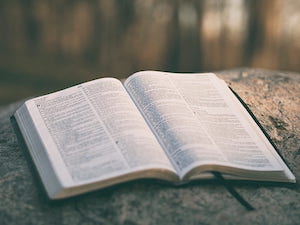 The same principle applies to the Ekklesia today. We do not have the authority to redesign what God has established. Our responsibility is to build according to His Word, His Spirit, and His Kingdom blueprint. (Photo via PickPik)
Even more remarkable is the fact that the ark had only one door. That detail is not accidental. Jesus would later declare, "I am the door" (John 10:9). The ark was far more than a vessel designed to survive a storm. It was a prophetic shadow of Christ Himself. Just as there was only one way into the ark, there is only one way into salvation. Just as everyone who entered the ark found refuge from judgment, everyone who enters Christ finds life, security, and redemption.
The Flood Lifted What It Couldn't Destroy
One of the most overlooked details in the story is that the very waters that brought judgment upon the earth became the means by which the ark was lifted higher. The same flood that destroyed one realm elevated another. While the world around Noah was being overwhelmed, the ark was rising.
This reveals a profound Kingdom principle. What destroys the world does not have to destroy the people of God. In fact, God often uses the very circumstances that seem threatening to advance His purposes. Throughout Scripture we see this pattern repeatedly. Egypt's oppression positioned Joseph for promotion. Babylon's captivity elevated Daniel into influence. Persecution scattered the early Church, but that scattering became the means by which the Gospel spread throughout the known world. What appeared to be a setback became a setup for Kingdom advancement.
Many Believers are looking at cultural upheaval, economic uncertainty, and personal challenges and wondering if the storm will overwhelm them. Yet Noah's story reminds us that when we are walking in obedience, the very thing the enemy intends to use against us may become the thing God uses to carry us into a higher purpose. The flood did not sink the ark because God never intended the storm to destroy what He had ordained to preserve.
The Altar Always Comes Before the Assignment
 When the waters finally receded, the ark came to rest upon the mountains of Ararat. Throughout Scripture, mountains are often associated with government, authority, and divine encounter. Yet what Noah did next is perhaps the most important part of the entire story. (Photo via Unsplash)
His first act was not building a house, planting a vineyard, or rebuilding society. His first act was building an altar. Before there was activity, there was worship. Before there was expansion, there was surrender. Before there was dominion, there was devotion. That remains God's pattern today.
The story of Noah is ultimately not about surviving a flood. It is about becoming the kind of people who carry God's purpose through seasons of shaking. The ark points us to Christ. The flood reminds us that God remains sovereign over every storm. The altar teaches us that preservation alone is not the goal. God's desire is that every season of testing produces deeper worship, greater alignment, and renewed Kingdom assignment.
Trusting in the Father
Today, some of you feel surrounded by rising waters. The culture is shifting. The world seems unstable. The future feels uncertain. But remember this: Noah was never safer than when the storm was at its worst, because he was exactly where God told him to be. The same is true for us.
Father, help us build according to Your pattern and not our preferences. Teach us to trust You in every season of shaking and to remain anchored in Christ when storms arise. May every challenge deepen our devotion, strengthen our faith, and position us for Your purposes. Let our lives become altars of worship and testimonies of Your faithfulness. In Jesus' name, amen.
Whatever you do, don't miss another ELIJAH LIST email! Subscribe at this link: elijahlist.com/subscribe.
Dr. Scott Reece
Lead Pastor of River City Church
Email: drscottreece@yahoo.com
Website: www.drscottreece.com
Dr. Scott Reece is a husband, father, lead pastor, church planter, and apostolic leader of the Azusa Network of Churches and Ministries. His passions include pastoral leadership, global missions, studying, preaching, and teaching the Word of God. Being called as a pastor to pastors, serving leaders, congregations, and ministries, he is committed to Biblical and leadership authenticity. With an apostolic mantle on his life, he is passionate about equipping and releasing the next generation of leaders in the fullness of the Kingdom. He and his wife, Michelle, make their home in Bettendorf, Iowa, and are lead pastors of River City Church, located in the Quad Cities. They are the proud parents of six children and three grandchildren.
To receive more words like this in YOUR inbox, subscribe FREE to the Elijah List at this link: elijahlist.com/subscribe.

Thank you for making the always-free "ElijahStreams" possible. To partner with us, click here.
Your donations truly help us keep these emails free for you. Donate at:
Find us on:
* Facebook click here