Nathan Shaw: "Promise in the Midst of Pain"
Oct 3, 2023
From the Desks of Steve Shultz and Julie A. Smith:
This recent word from Nathan Shaw is a great reminder to us all that we "walk by faith, not by sight"! For some of you, God is calling you to new territories you've never known or walked in before. This word by Nathan will help you as he says shares this short but powerful statement: What does it take to become a father of faith? Believing against all odds, even when God's promises look increasingly impossible.
In Christ, Steve Shultz and Julie A. Smith, Co-Editors Thank you for making the always-free Elijah List Ministries possible. To partner with us, click here. Your donations truly help us keep these emails free for you. Donate at: Enjoy! And thanks for forwarding this to your friends! They can subscribe here.
 "Promise in the Midst of Pain"
I woke up with two Bible scenes in my spirit. The two scenes were superimposed on top of one another, almost like they were one and the same scene. The first scene was Abram contending with God because he was childless (Genesis 15:2-3). The second scene was Hannah interceding before God because she also was childless (1 Samuel 1:10-11). Although both scenes are similar, I had not put them together before. Sometimes God communicates by connecting passages of Scripture that we have not connected. It's His way of saying, "See, I know the Bible much better than you do, and if I know the Bible and its cast of characters so well, surely I know your situation and your circumstances equally as well." Abram's and Hannah's Unified Cry Abram's and Hannah's unified cry is a small picture of the many similar cries that have come before God down through the ages. Here's the sequence of events that preceded Abram contending with God:
Despite the incredible victory, despite the phenomenal blessing, despite the profound vision, Abram was in deep pain and it didn't make sense. "...'Lord GOD, what will You give me, seeing I go childless, and the heir of my house is Eliezer of Damascus?... Look, You have given me no offspring; indeed one born in my house is my heir!'" (Genesis 15:2-3) Hannah's situation was similar but different. On the bright side, Hannah was greatly loved by her husband, and she and her husband were absolutely devoted to the Lord. But regardless, Hannah was childless, and to make matters worse, her husband's second wife, Peninnah, had both sons and daughters. Peninnah was cruel and provoked Hannah severely. In bitterness of soul, Hannah prayed to the Lord and wept in anguish. So great was her distress that Eli, the high priest, actually thought she was drunk! Woven into the Fabric of Covenant Relationship with God The theme of covenant relationship with God dominates the stories of both Abram and Hannah. In fact, God became so associated with Abram, that He changed Abram's name to Abraham, and even became known as the God of Abraham, the God of Isaac, and the God of Jacob (Exodus 3:6, 15)... Intricately woven into the tight-knit fabric of covenant relationship is the promise of destiny, fulfillment and fruitfulness. Unrealized promise leads to unrelenting pain. That's precisely why covenant relationship can be so painful. Abram and Hannah both experienced indescribable pain, but God was not absent from the picture. God reassured Abram that Eliezer of Damascus would not be his heir, but rather one who would come from his own body (Genesis 15:4). In the course of time, Abram became the father of Isaac, Isaac became the father of Jacob, and Jacob became the father of the twelve tribes of Israel.
What It Takes to Become a Father of Faith Despite their pain, Abram and Hannah demonstrated heightened levels of faith, surrender and devotion. Abram was old. He had no child. His wife was past the age of child bearing. Armed with only a promise, he believed Yahweh (Genesis 15:6). Two thousand years later, Paul referred to Abraham as the father of faith (Romans 4:12, 16; Galatians 3:29). What does it take to become a father of faith? Believing against all odds, even when God's promises look increasingly impossible. Hannah was continually reminded of her barrenness because Peninnah's sons and daughters were in her face. When Hannah finally had only one son, she weaned him, and then surrendered him to Yahweh's service. She did this even though Samuel was still only a young boy (1 Samuel 1:11, 24-28). How about you? Have you experienced seasons of indescribable pain? Like Abram, have you watched life seasons come and go—and the seasons now seem irretrievable? Or, like Hannah, have you lived bereft of things that come from God-breathed desires, all while watching 'Peninnahs' live full and fulfilling lives? There are many 'Abrams' and 'Hannahs' in this generation. Despite deep pain, intense anguish and overwhelming confusion, God's promises will be fulfilled through their lives. Whatever you do, don't miss another ELIJAH LIST email! Subscribe at this link: elijahlist.com/subscribe. Nathan Shaw Nathan Shaw helps bring individuals and churches into dynamic encounters with God's indescribable love. Over the last twenty years he has been instrumental in ushering in significant moves of the Spirit in over ten different nations. Many have experienced life-changing prophetic encounters and dramatic visitations from God. Nathan is the author of two books: Passion and Fire and Unto the Least of These. Nathan is senior pastor at Fire and Destiny Centre, Dunedin and Celebration Church, Mosgiel. To receive more words like this in YOUR inbox, subscribe FREE to the Elijah List at this link: elijahlist.com/subscribe. Find us on: |

 When you know that you know you've heard from God about His promises over your life, be encouraged to push through, no matter what odds are stacked against you. You'll get a great message about this from Nathan's word today. (To Subscribe to the Elijah List


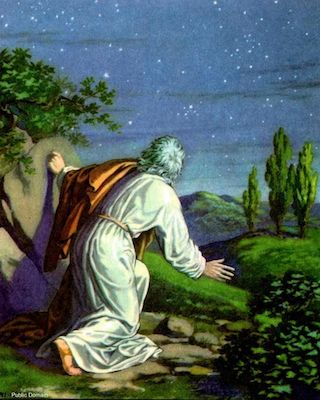 Firstly, he defeated a powerful confederation of kings, despite the fact that he only had a small army. Secondly, when he returned from battle he was blessed by the legendary priest, Melchizedek: "...'Blessed be Abram of God Most High, Possessor of Heaven and Earth; and blessed be God Most High, Who has delivered your enemies into your hand'..." (Genesis 14:19-20). Thirdly, he encountered Yahweh in a profound vision. Yahweh spoke directly to his heart: "...'Do not be afraid, Abram. I am your shield, your exceedingly great reward'" (Genesis 15:1). (Photo via Flickr)
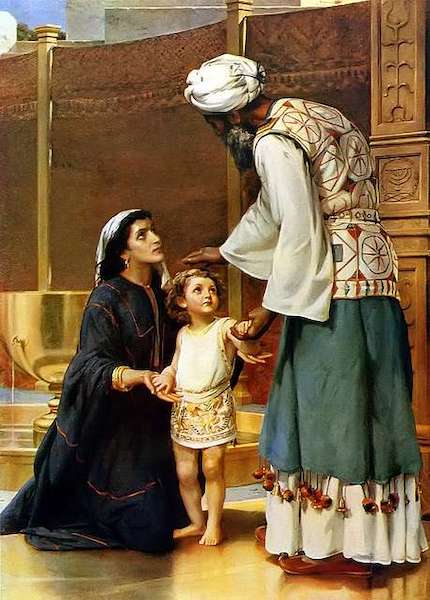 When Eli realized that Hannah was distressed rather than drunk, he stopped reprimanding her, and instead blessed her: "...'Go in peace, and the God of Israel grant your petition which you have asked of Him'" (1 Samuel 1:17). After receiving Eli's blessing, Hannah became pregnant and gave birth to Samuel—one of the greatest prophets of all time. It was Samuel who anointed King David, and it was David who established a seat for Jesus the Messiah. (Photo via GetArchive)